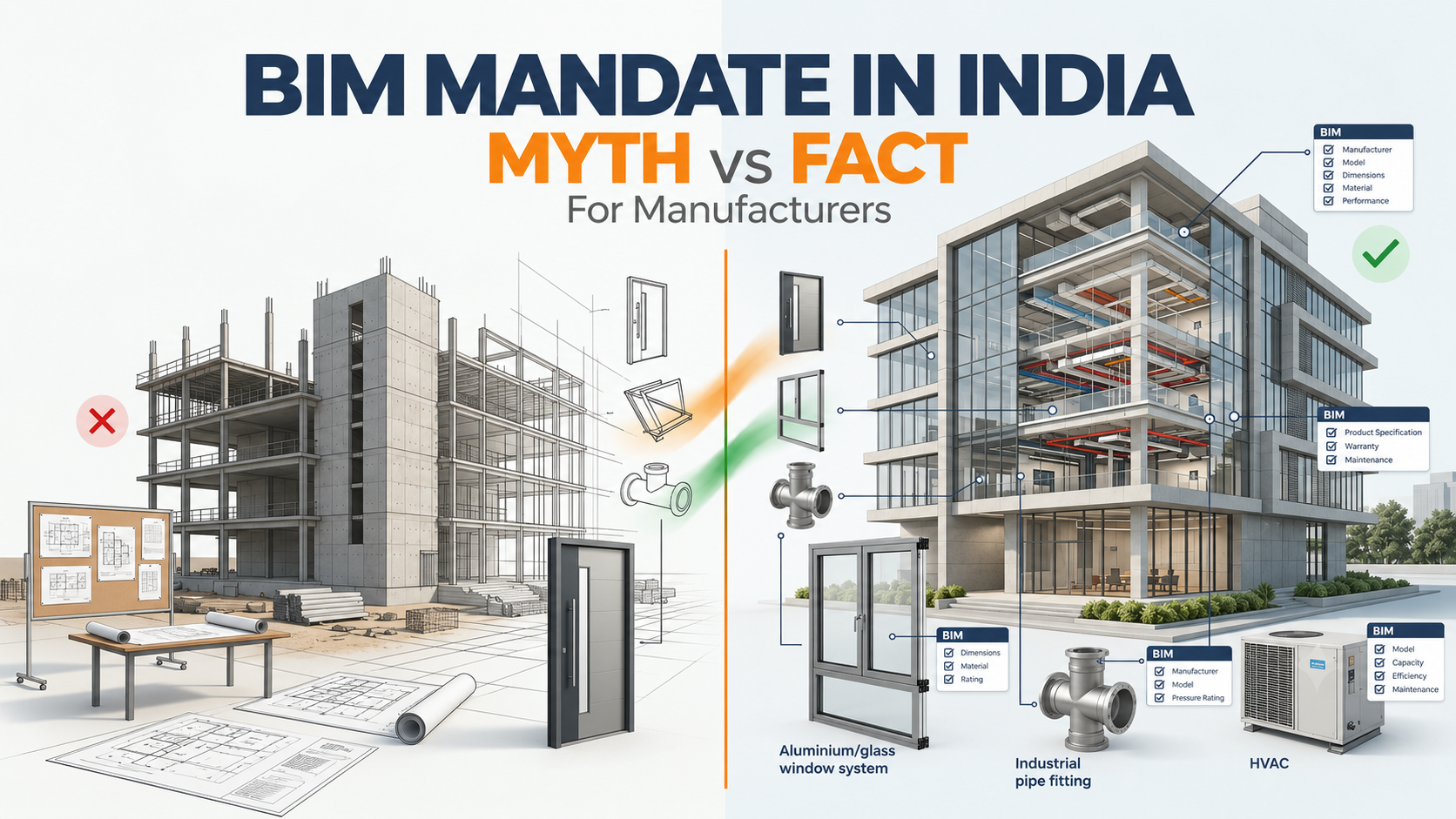

BIM Mandate in India: Myth vs Fact for Manufacturers
Building Information Modeling (BIM) is gaining strong momentum across India’s construction and infrastructure sector. Public agencies, developers, consultants, and contractors increasingly ask for BIM-based deliverables, and the word “mandate” now appears in tender discussions, webinars, and blog posts almost daily.
For manufacturers, this creates both opportunity and confusion. Some believe BIM objects are legally required for every product sold in India. Others assume BIM can wait. The reality sits between these two positions, and understanding it helps you invest in BIM content, BIM libraries, and Revit families at the right time and in the right way.
Why the BIM Mandate Conversation Matters for Manufacturers
Even when a BIM requirement applies to a project and not to a product, manufacturers feel the impact. Design teams working in BIM need product objects that can be placed, scheduled, coordinated, and handed over. If your BIM content is missing or unreliable, your product can be replaced by a competitor’s during design.
The mandate conversation is therefore less about compliance and more about specification visibility. A manufacturer with a well-organised BIM library is easier to find, easier to specify, and easier to keep in the final BIM models.
BIM Mandate in India: Myth vs Fact
Myth 1: India has one national law that makes BIM compulsory for all projects
Fact: There is currently no blanket nationwide BIM law. Requirements are driven mainly by individual agencies, project owners, and contract documents, and they differ by project type and value.
Myth 2: Every government project in India must use BIM
Fact: BIM requirements are usually project-specific and often linked to cost thresholds, funding sources, or tender conditions. Some public bodies encourage or pilot BIM, while formal obligations differ from one organisation to another.
Myth 3: If a project needs BIM, manufacturers must supply BIM objects
Fact: Project-level requirements are placed on the project team, not directly on manufacturers. However, design teams still need reliable BIM objects from a manufacturer BIM library to meet their own deliverables, and products without usable BIM content are easier to replace during design.
Myth 4: Any 3D model counts as BIM content
Fact: A visual 3D model is not enough. Useful BIM content carries structured parameters, correct classification, an appropriate level of detail, and consistent naming, so that BIM models can be scheduled, coordinated, and handed over without manual rework.
Myth 5: Revit families are all a manufacturer needs
Fact: Revit families are essential because Revit is widely used on Indian projects, but a strong BIM library should also support open formats such as IFC and, where relevant, other authoring platforms. Well-built Revit families still need accurate parameters and clean geometry to be useful.
Myth 6: BIM mandates only matter at the design stage
Fact: Many owners want BIM to support construction, operation, and maintenance. Product identifiers, performance data, and maintenance requirements turn BIM objects into long-lived BIM assets that remain useful after handover.
Myth 7: India already has its own complete, universally followed BIM standard
Fact: Indian projects commonly refer to international standards such as the ISO 19650 series, together with project-specific BIM execution plans and employer’s information requirements. Always check which documents a particular tender actually cites.
Myth 8: If a blog or webinar says a mandate exists, it must be official
Fact: Many mandate claims circulate through secondary sources, and thresholds and dates are often quoted differently. Before relying on a claim, ask for the circular number, notification, or tender clause.
Myth 9: BIM content is only a marketing asset
Fact: BIM content now supports product selection, specification, procurement, and facility management. It works as a connected information asset, not just a downloadable file.
What Is Driving BIM Adoption in India?
Regardless of formal mandates, several forces are pushing demand for BIM models and product-level data:
- • Large public infrastructure programmes, including metro, highway, and building projects
- • Private developers seeking better cost control and coordination
- • International consultants and contractors working on Indian projects
- • Growing interest in digital twins, asset management, and lifecycle information
- • Wider use of cloud collaboration, automation, and AI-assisted workflows
Together, these make BIM-ready product information a practical expectation in many tenders, even where no formal mandate exists.
From BIM Objects to Intelligent BIM Assets
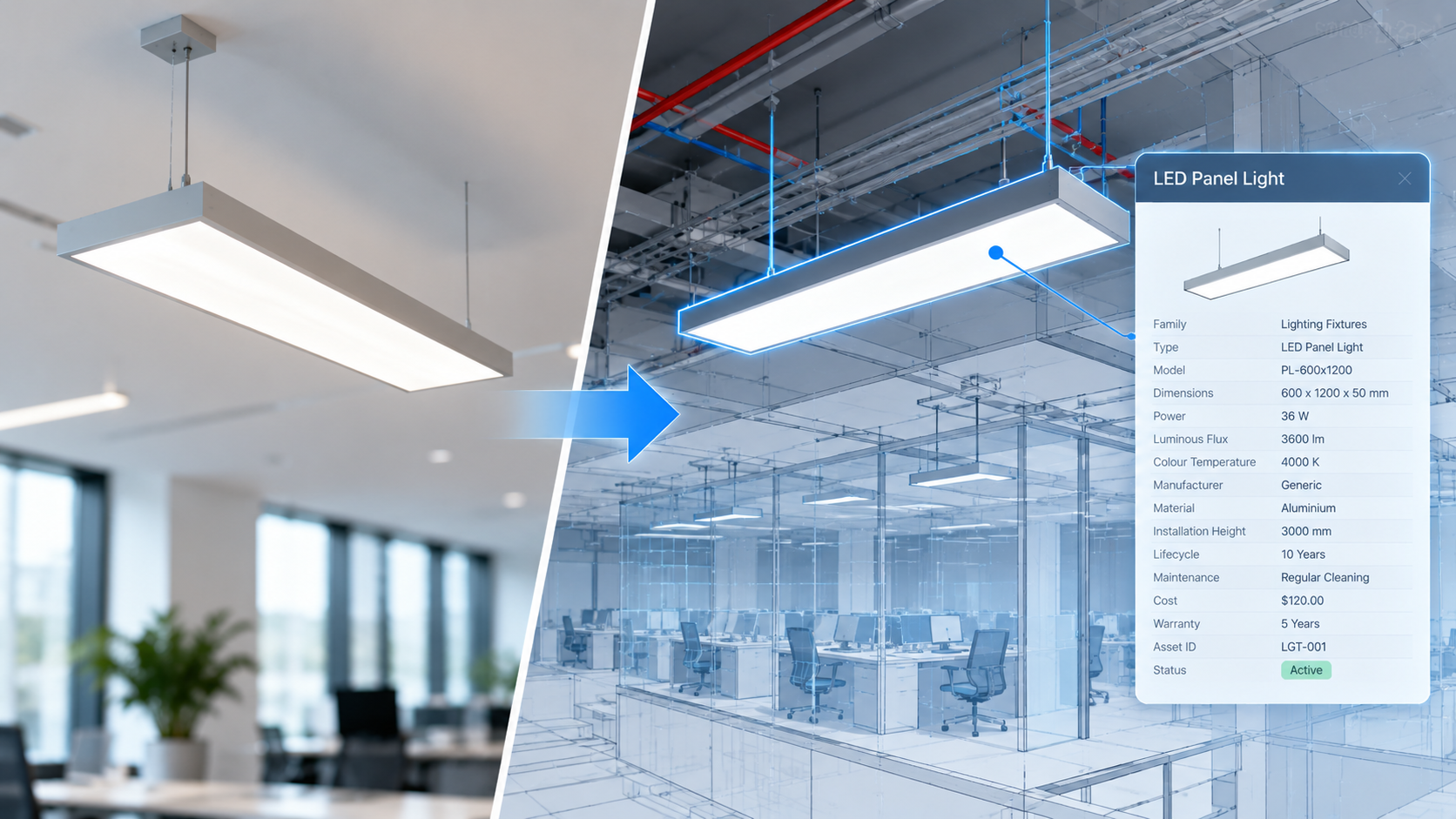
Traditionally, BIM objects were digital versions of catalogue products with basic geometry, dimensions, and materials. Today, project teams want more. Intelligent BIM assets combine geometry with technical specifications, product identifiers, performance data, maintenance requirements, and sustainability information.
This changes BIM content from a static model component into a source of structured digital information that supports product selection, procurement, facility management, sustainability analysis, and future digital twin applications.
How Manufacturers Can Prepare: BIM Library and Revit Families Checklist
Manufacturers do not need to wait for a universal mandate. A sensible approach is to prepare for the direction of the market:
- • Verify requirements by project. Check the tender documents, BIM execution plan, and client information requirements instead of relying on general claims.
- • Build accurate Revit families. Use clean geometry, standardised parameters, appropriate levels of detail, and clear naming conventions.
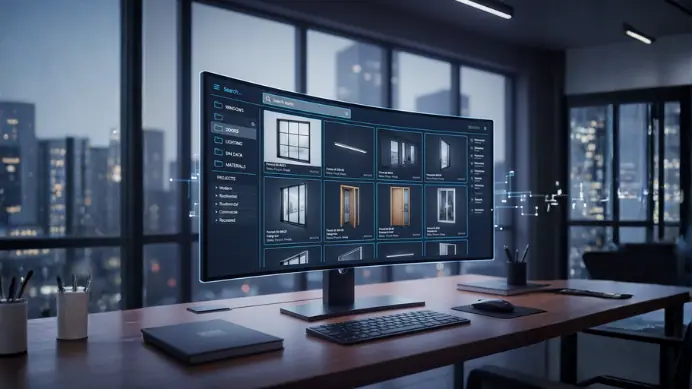
- • Create a centralised BIM library. Keep consistent product information across platforms so designers always download the right version of your BIM objects.
- • Include lifecycle data. Add product identifiers, performance information, installation requirements, maintenance details, and sustainability data.
- • Support open formats. IFC and common classification systems help BIM content move between software and project environments.
- • Maintain content over time. Treat BIM assets as continuously managed information, not files created once and forgotten.
Done correctly, this also reduces duplication and gives design professionals reliable data that fits different BIM workflows.
Frequently Asked Questions
Is BIM mandatory in India?
There is no single nationwide law that makes BIM compulsory for every project. Requirements are set by individual agencies, clients, and tender documents, so the answer depends on the project. Always check the contract documents.
What are BIM objects?
BIM objects are digital representations of real products that combine geometry with data such as dimensions, materials, manufacturer details, and performance information. Designers place them in BIM models to design, schedule, and coordinate.
What is the difference between a BIM library and Revit families?
A BIM library is an organised collection of BIM objects, often hosted by a manufacturer or platform. Revit families are the native object format used in Autodesk Revit, and they are usually one of several file types stored in a BIM library.
Why do manufacturers need structured BIM content?
Structured BIM content helps products appear in design, specification, and procurement workflows. Consistent parameters reduce rework for design teams and make a product easier to select and keep in a project.
How do BIM assets support facility management?
BIM assets retain product information such as identifiers, maintenance requirements, and replacement details. This information can be used during operation, maintenance, and asset management after the building is handed over.
The Road Ahead for BIM Content in India
BIM requirements in India are likely to become clearer and more widespread as agencies formalise standards and digital delivery expectations. Manufacturers that separate myth from fact today can respond calmly, invest where it matters, and be ready when requirements tighten.
The real question is not whether a mandate applies to a particular product. It is whether your product’s digital information is ready when a design team needs it. The BIM object of the future will not simply show what a product looks like. It will help communicate what the product is, how it performs, where it belongs, and how it can be managed throughout its lifecycle.
Reference: Building Information Modeling (BIM), ISO 19650 information management practices, digital construction, open standards, product information management, and digital twin practices.