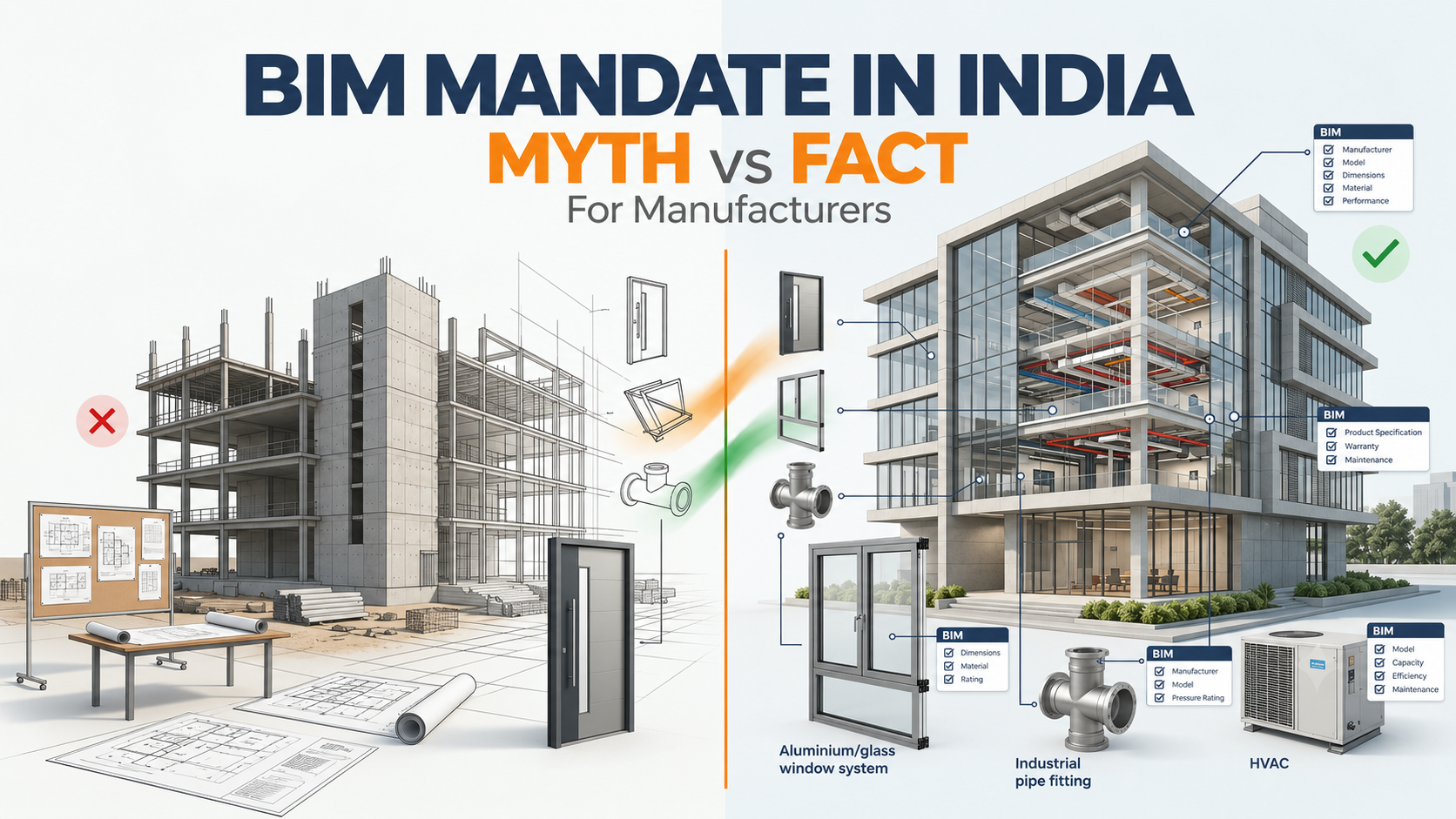

Building Information Modeling (BIM) content has become an essential part of modern AECO workflows. Architects, engineers, contractors, manufacturers, and facility managers increasingly rely on digital product information to make informed decisions throughout the building lifecycle. As BIM adoption continues to expand, the role of BIM content is also changing significantly.
Traditionally, BIM objects were primarily created as digital representations of physical products. They contained basic geometry, dimensions, materials, and technical information that allowed design professionals to place products into BIM models. While this approach remains valuable, the growing demand for connected and data-driven construction is creating new expectations for BIM content.
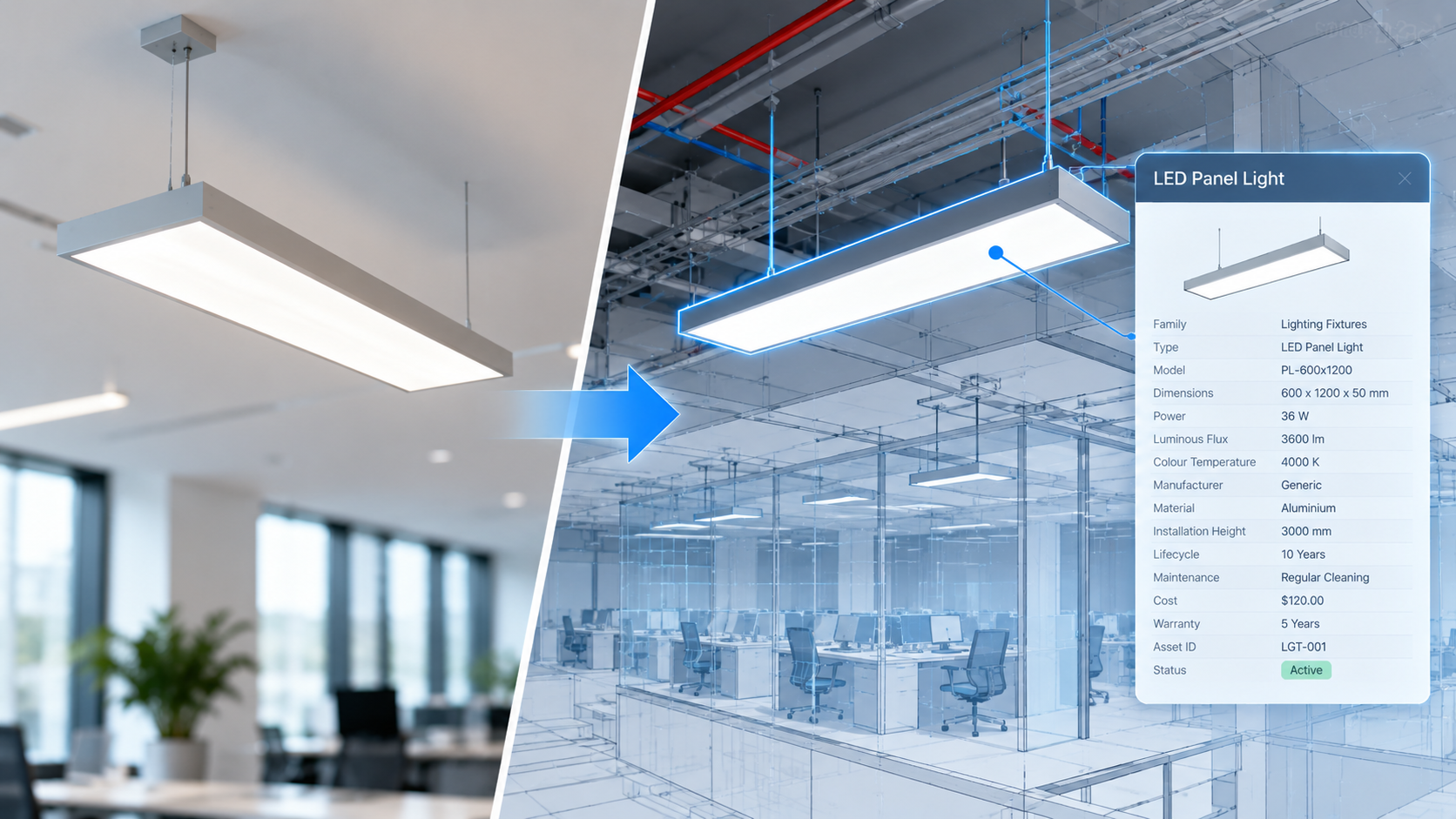
The next generation of BIM content is moving beyond static geometry toward intelligent digital assets. These BIM assets can contain richer information, support automated workflows, connect with external data sources, and contribute to decision-making throughout design, construction, operation, and maintenance.
From Static BIM Objects to Intelligent Digital Assets
For manufacturers and AECO professionals, this transformation creates new opportunities. BIM content can become more than a digital version of a catalogue product. It can become a connected information asset that supports product selection, project coordination, procurement, facility management, sustainability, and future digital twin applications.
Traditional BIM objects are often developed with predefined geometry and product parameters. Designers can place these objects into a model and access information such as dimensions, materials, manufacturer details, and technical specifications. However, buildings are becoming increasingly data driven. Project teams require information that can support multiple workflows rather than simply representing how a product looks.
This is driving the development of BIM assets that contain structured, reusable, and context-aware information. An intelligent digital asset can combine geometry with technical specifications, product identifiers, performance information, maintenance requirements, sustainability data, and other relevant information. Depending on the workflow, the asset can also be connected to external databases, product platforms, or asset management systems.
This evolution changes BIM content from a static model component into a source of structured digital information.
Practical Applications of Intelligent BIM Content
- • Smarter Product Selection: Intelligent BIM assets can provide detailed product parameters that help architects and engineers evaluate products based on project requirements.
- • Automated Design Workflows: Structured BIM data can support automation by allowing software and workflows to use predefined product parameters for modelling, documentation, and coordination.
- • Manufacturer Product Libraries: Manufacturers can create a centralized BIM library containing consistent product information, including Revit families, across multiple BIM platforms and project requirements.
- • Specification and Procurement: Structured product data can support specifications, schedules, quantity information, and procurement workflows, reducing repetitive manual data entry.
- • Facility Management: BIM assets can retain relevant product information that may be useful during operation, maintenance, replacement, and asset management.
- • Sustainability Analysis: BIM content can incorporate relevant environmental and material information, helping project teams evaluate products during design and procurement.
- • Digital Twin Integration: Structured BIM assets can provide valuable product information that may contribute to digital representations of physical building assets.
How Intelligent BIM Content Will Shape the Future
The development of intelligent BIM content is closely connected to wider changes across the AECO industry. Cloud collaboration, automation, artificial intelligence, digital twins, open standards, and connected project platforms are creating demand for BIM information that can move between different workflows.
- • Data-Rich BIM Objects: Future BIM assets are likely to contain richer technical, performance, lifecycle, and sustainability information instead of relying primarily on geometry.
- • Connected Product Information: BIM assets can increasingly connect project models with manufacturer databases and digital product platforms, helping information remain accessible and consistent.
- • AI-Assisted BIM Workflows: Artificial intelligence can use structured BIM information to support product recommendations, model checking, classification, information extraction, and other repetitive processes.
- • Interoperable Digital Assets: Open standards and interoperable workflows can help BIM information move between different applications and project environments with fewer information barriers.
- • Lifecycle-Based Information: BIM content can increasingly support the entire asset lifecycle, from design and construction through operation, maintenance, refurbishment, and replacement.
- • Digital Twin Readiness: As digital twin adoption grows, structured product-level information can become an important component of connecting physical assets with their digital counterparts.
- • Dynamic Information Management: Instead of treating BIM objects as files that are created once and rarely updated, future BIM content can be managed as continuously maintained digital information assets.
What Intelligent BIM Content Means for Manufacturers
For manufacturers, the evolution of BIM content represents a shift in how digital product information should be developed and managed. A manufacturer may no longer need to think of a BIM object simply as a downloadable 3D model.
Instead, the BIM asset can represent a digital extension of the physical product. It can communicate product identity, specifications, performance information, installation requirements, maintenance data, sustainability information, and other relevant details throughout the building lifecycle.
This approach can also improve consistency. When product information is structured correctly, manufacturers can reduce duplication and provide design professionals with reliable information that is easier to integrate into different workflows.
The quality of the underlying data becomes increasingly important. Accurate geometry, standardized parameters, appropriate levels of detail, clear naming conventions, and reliable technical information all contribute to creating useful BIM assets, from well-built Revit families to a complete manufacturer BIM library.
Manufacturers that invest in structured BIM content can therefore prepare their product information for an industry that increasingly depends on connected digital workflows.
Frequently Asked Questions
What is intelligent BIM content?
Intelligent BIM content combines geometry with structured information such as technical specifications, product identifiers, performance data, maintenance requirements, and sustainability data. It can support automated workflows and connect with external databases or asset management systems.
What is the difference between BIM objects and BIM assets?
BIM objects are digital representations of products with geometry, dimensions, and basic technical information. BIM assets go further by carrying structured, reusable, and context-aware data that supports selection, procurement, operation, and maintenance across the building lifecycle.
Why do manufacturers need a BIM library?
A BIM library gives manufacturers a central place to keep consistent product information across BIM platforms. It helps design professionals find, specify, and reuse reliable BIM objects and Revit families, and reduces duplicated effort.
How do Revit families fit into intelligent BIM content?
Revit families are the native object format for Autodesk Revit. When they carry accurate parameters, standardized naming, and appropriate levels of detail, they become a strong base for intelligent BIM content that works in BIM models, schedules, and coordination.
How does intelligent BIM content support digital twins?
Structured product-level information can connect physical building assets with their digital counterparts. Details such as identifiers, performance data, and maintenance requirements help digital twins represent and manage real assets over time.
What makes BIM content high quality?
High-quality BIM content has accurate geometry, standardized parameters, appropriate levels of detail, clear naming conventions, and reliable technical information. These qualities make BIM objects easier to integrate into different workflows.
The Road Ahead for BIM Content
The future of BIM content is not simply about creating more detailed 3D models. It is about creating better digital information.
As AECO workflows become more connected, BIM assets will increasingly need to support different users, software platforms, project stages, and lifecycle requirements. The most valuable BIM content will combine useful geometry with reliable information and interoperability.
For manufacturers, this means BIM content can become an important part of their broader digital strategy. For architects, engineers, contractors, and owners, intelligent BIM assets can provide better access to the information needed to make decisions throughout a project's lifecycle.
The transition from static objects to intelligent digital assets represents an important step in the evolution of BIM. The BIM object of the future will not simply show what a product looks like. It will help communicate what the product is, how it performs, where it belongs, and how it can be managed throughout its lifecycle.
Reference: Building Information Modeling (BIM), digital construction, open standards, product information management, and digital twin practices.