
Introduction
As Building Information Modelling (BIM) continues to shape the Architecture, Engineering, Construction and Operations (AECO) industry, manufacturers have new opportunities to make their products accessible to architects, engineers and other construction professionals through digital content.
However, creating a 3D model of a physical product is only the beginning.
A useful BIM object should do more than represent how a product looks. It should also contain accurate geometry, relevant technical information and practical data that professionals can use during the design and specification process.
So, what makes a BIM object high-quality? And what should manufacturers consider when preparing their products for BIM?
Let's explore.
1. What Is a BIM Object?
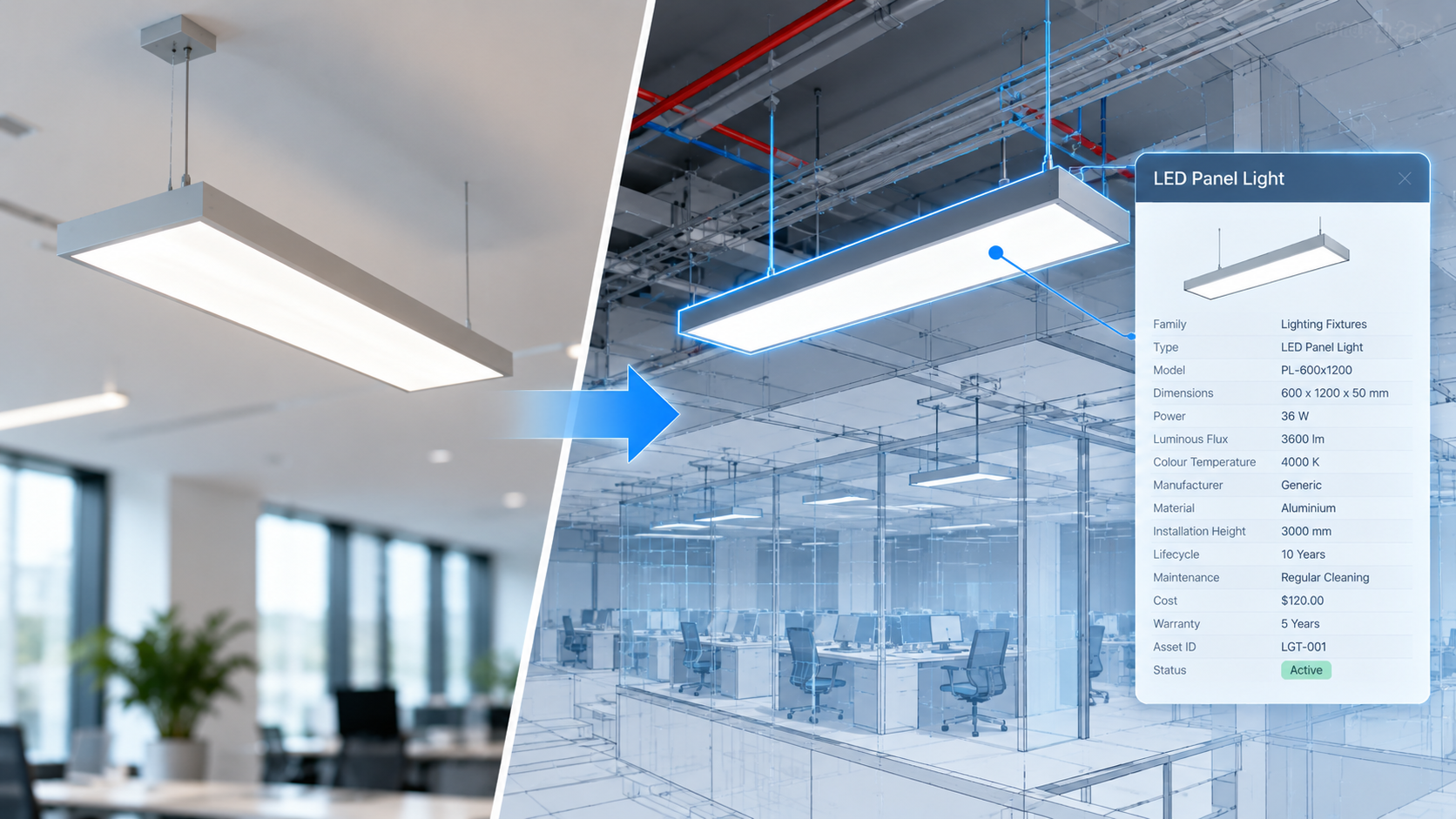
A BIM object is a digital representation of a physical building product or component that contains both geometric information and relevant non-geometric data.
For example, a manufacturer producing aluminium windows may provide a BIM object containing:
- Width, height and depth
- Frame and material information
- Opening type
- Thermal and acoustic performance, where applicable
- Product identification and manufacturer details
Architects and engineers can use this information within BIM software to incorporate the product into their building models and evaluate its suitability for a project.
Unlike a basic 3D model, a BIM object combines visual representation with structured product information that supports design and decision-making.
2. Why 3D Geometry Alone Is Not Enough
One common misconception is that a BIM object is simply a 3D model.
While geometry is important, the information associated with the object is equally valuable.
Consider a water pump.
A basic 3D model may show the pump's shape and appearance. However, an engineer selecting a pump for a project may also need information such as:
- Product dimensions
- Flow rate and operating pressure
- Motor power
- Connection details
- Material specifications
- Manufacturer and product reference
The 3D geometry helps the engineer understand how the pump fits into the building model, while the technical information helps evaluate whether it is suitable for the intended application.
This combination of geometry and relevant product information makes a BIM object more useful than a visual-only model.
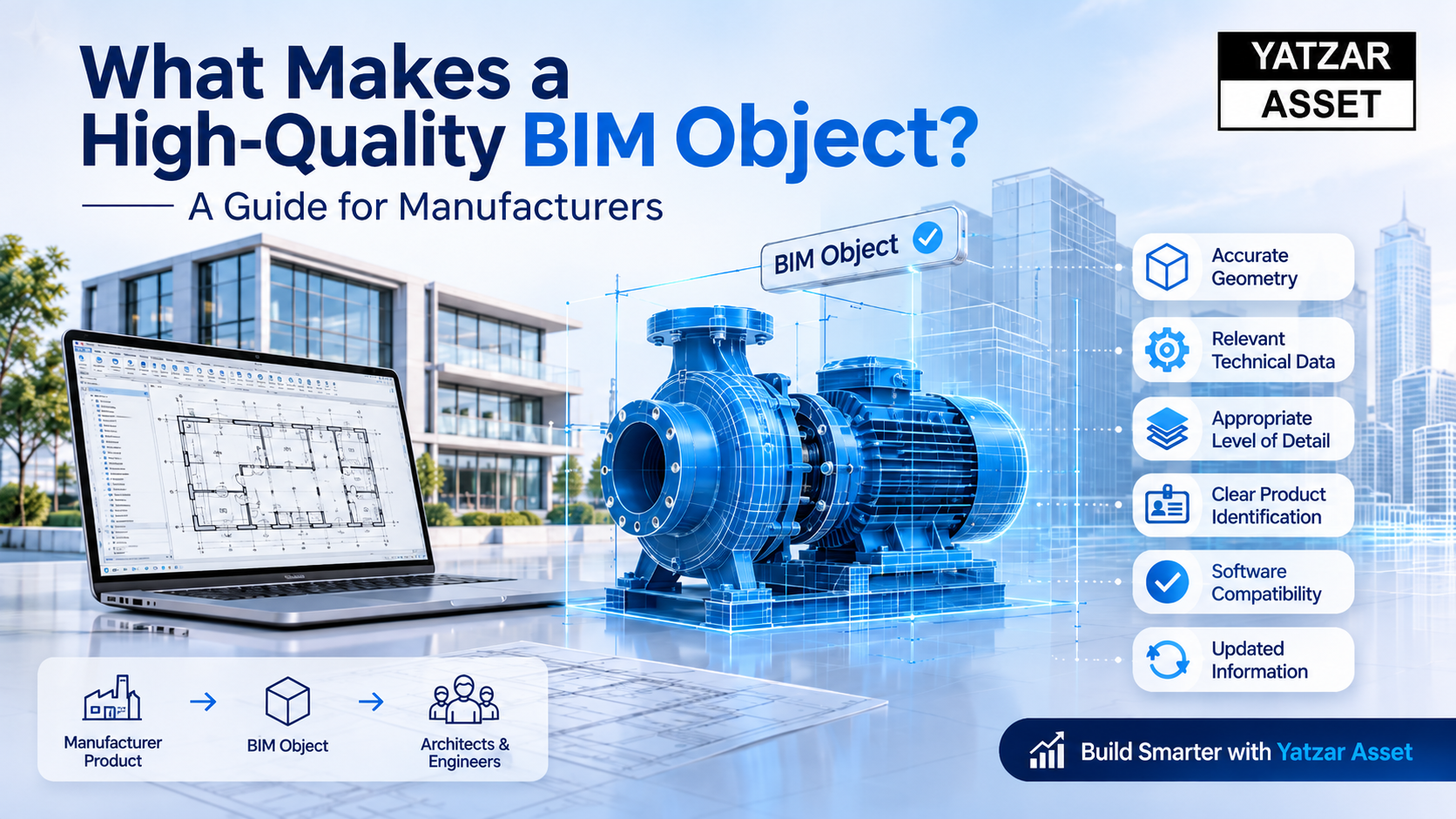
3. Essential Elements of a High-Quality BIM Object
A well-prepared BIM object should consider several important elements.
A. Accurate Geometry
The digital model should represent the physical product accurately, particularly its overall dimensions and components that affect installation, coordination or design.
Unnecessary internal details should be avoided when they do not add value to the intended BIM use.
B. Relevant Technical Parameters
Technical parameters provide information that professionals need to understand and evaluate a product.
Depending on the product category, these may include dimensions, material, capacity, power ratings, performance characteristics and connection details.
The information should be accurate, relevant and aligned with the product's intended application.
C. Appropriate Level of Detail
A BIM object should contain an appropriate level of geometric and information detail for its intended use.
An excessively detailed model may increase file complexity without improving its usefulness.
For example, an architect may need the external dimensions and appearance of a light fitting, while an electrical engineer may require additional electrical specifications.
The level of detail should therefore be based on the requirements of the professionals using the object.
D. Clear Product Identification
Every manufacturer-specific BIM object should clearly identify the product it represents.
Useful information may include:
- Manufacturer name
- Product name and model number
- Product category
- Product reference or code
- Relevant product documentation
This helps professionals identify the actual product instead of relying on a generic representation.
E. Software Compatibility and Usability
A BIM object should be prepared for its intended BIM software and tested to ensure that it behaves as expected.
Manufacturers should consider supported file formats, parameter behaviour, object placement and usability within the target software.
Where appropriate, providing open and interoperable formats can also support information exchange between different BIM applications.
F. Updated Product Information
Products may change over time. Manufacturers may introduce new specifications, dimensions, materials or product versions.
BIM content should be reviewed and updated when relevant product information changes.
Providing outdated digital content can create confusion during product selection and specification.
4. How Do Architects and Engineers Use BIM Objects?
BIM objects can support product selection at different stages of the design process.
Consider an architect working on a commercial building.
Instead of using only a generic window representation, the architect can explore manufacturer-specific BIM objects and review relevant product information.
The architect may evaluate:
- Whether the product dimensions suit the design
- Whether its appearance matches the architectural requirements
- Whether its specifications meet the project requirements
- Whether the product can be incorporated into the BIM model
Similarly, MEP engineers may use manufacturer BIM objects for equipment such as pumps, HVAC units, lighting fixtures and electrical components.
Having suitable digital product content available during design can help professionals make more informed product decisions.
5. How Can Manufacturers Prepare Their Products for BIM?
Manufacturers looking to make their products BIM-ready can begin with a structured approach.
Step 1: Identify Priority Products
Start with products that are relevant to architects, engineers and other AECO professionals.
Step 2: Collect Accurate Product Information
Gather product datasheets, technical specifications, dimensions, drawings, material details and other relevant documentation.
Step 3: Develop the Digital Model
Use available product drawings, CAD data or other reliable design information to develop the BIM geometry.
Step 4: Add Relevant Parameters
Include the technical information required by the intended users and applications.
Step 5: Review and Validate
Check the model's geometry, information, file usability and compatibility with the intended BIM software.
Step 6: Make the BIM Content Accessible
Publish the digital product content through suitable channels so that architects, engineers and other professionals can discover and use it.
This approach helps manufacturers move beyond conventional product catalogues and make their products available in digital design workflows.
6. Making Manufacturer BIM Content Discoverable
Creating BIM objects is an important step, but making them accessible to the right audience is equally important.
Architects, engineers, designers and other AECO professionals need convenient ways to discover manufacturer-specific digital product content.
When BIM objects are available through dedicated digital platforms, professionals can explore products, review relevant information and access digital content during their design workflows.
For manufacturers, this creates an opportunity to present their products in a format that aligns with the growing use of BIM across the construction industry.
7. How Yatzar Asset Connects Manufacturers with the AECO Industry
Yatzar Asset is a digital platform focused on BIM content and product discovery for the AECO industry.
It provides manufacturers with a platform to feature their products through BIM-ready digital assets, while architects, engineers, designers and other industry professionals can discover and access relevant product content.
By bringing manufacturer BIM content and AECO professionals together, Yatzar Asset supports greater digital product visibility and accessibility within the construction ecosystem.
For manufacturers looking to make their products available in BIM workflows, Yatzar Asset offers a platform to showcase their digital product content to a wider professional audience.
The goal is to make manufacturer-specific BIM content easier to discover and access when professionals need it during the design process.
Conclusion
A high-quality BIM object is more than a 3D representation of a physical product. It combines accurate geometry, relevant technical information, appropriate detail and practical usability.
For manufacturers, developing reliable BIM content is an opportunity to make their products easier to discover, evaluate and incorporate into digital construction workflows.
As the AECO industry continues to adopt digital processes, the quality and accessibility of manufacturer-specific BIM content will remain an important part of this transformation.
The question is no longer just whether a product has a 3D model, but whether it has the right digital information to support the people who design and build with it.